The Cloud 9 Towers Are Back
Rebuilt in time for the Philippines Pro, the boardwalk tower is once again the best seat on the island.
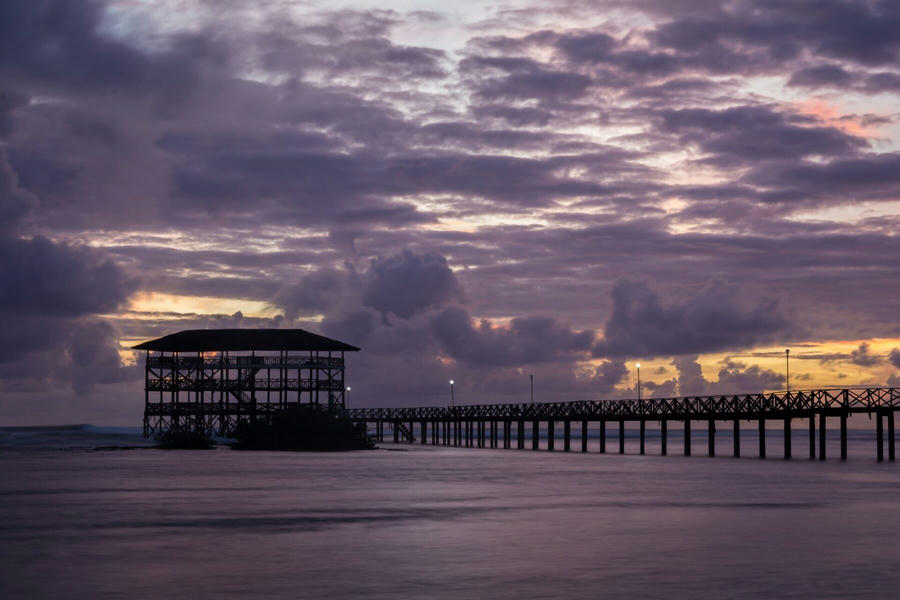

If you have ever seen a photograph of Siargao, you have almost certainly seen the tower. A timber walkway running out over the reef flat, a three-storey pagoda at the end of it, coconut palms crowding the shore behind. It has been on magazine covers, tourism posters, tattoo flash and roughly a million phone screens. For twenty years it was the single most recognisable object on the island — and for the better part of five, it was not there at all.
A short history of a wooden pier
The boardwalk was built in 2003, in the era when Cloud 9 was still a rumour passed between travelling surfers rather than a destination with an airport attached. The wave had been "discovered" by outsiders in the late eighties, the first international contest ran in 1996, and by the early 2000s enough people were coming that the local government put in a proper structure: a raised walkway so you could get out over the reef without wading, and a tower so you could see what the wave was actually doing.
That second part is the bit people forget. The tower is not a monument. It is a piece of surf infrastructure. From the top deck you are elevated maybe eight metres above sea level and standing directly inshore of the takeoff zone, which is precisely the angle you need to read a reef break. Every serious surfer in General Luna has stood up there in the dark waiting for enough light to make a decision.
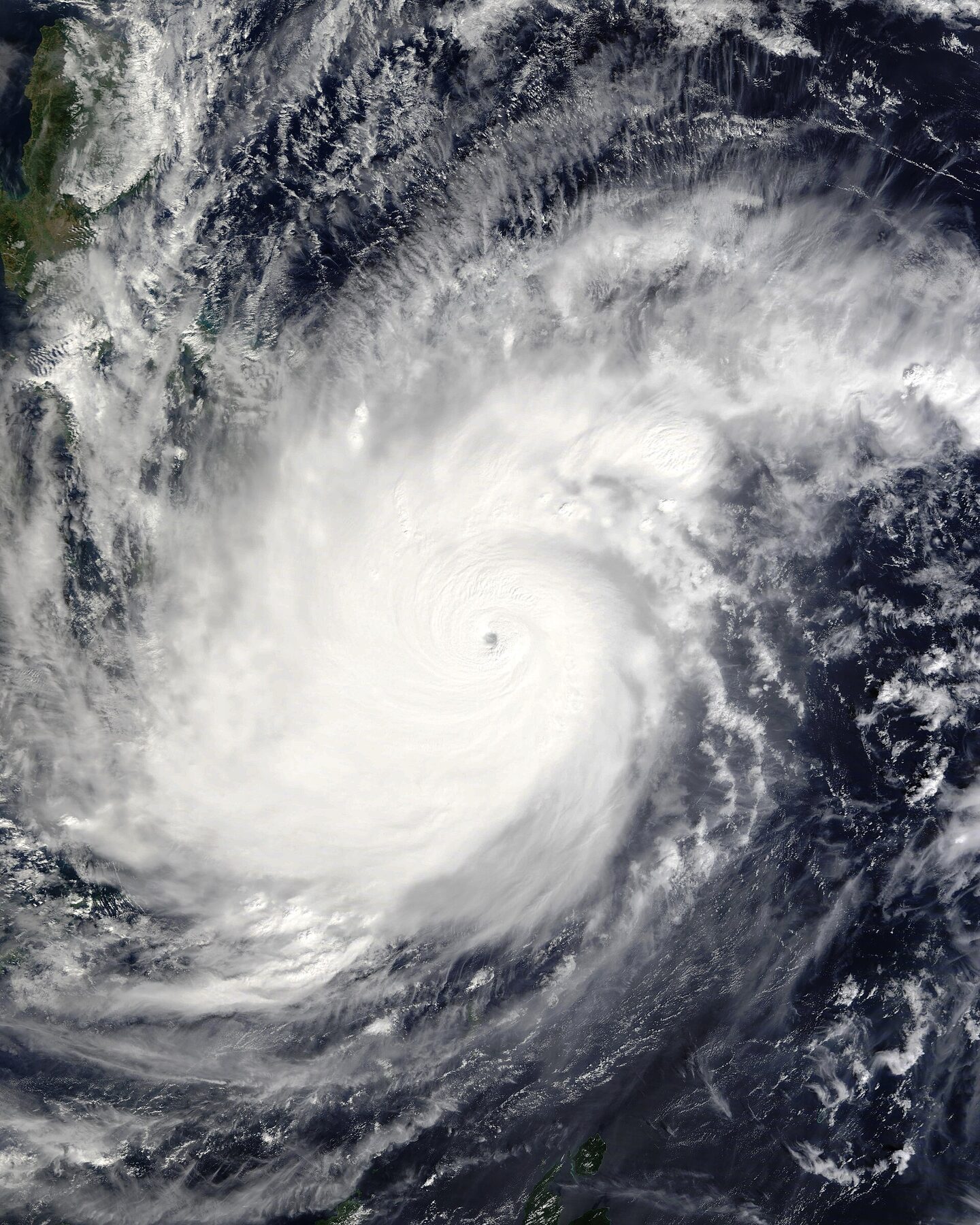
In December 2021, Super Typhoon Odette — known internationally as Rai — came across the Philippines as a Category 5 storm and made one of its landfalls on Siargao. It took the boardwalk apart. It also took apart most of General Luna: roofs, boats, power lines, the coconut plantations that give the island its skyline. The tower going down was the image that travelled, because it was the image people recognised, but it was a small part of what happened here.

The rebuild
What followed was slower than the news cycle. Power and water came first, then housing, then boats, then the things that bring visitors back. A temporary walkway went in fairly quickly because people still needed to get out to the reef. The full structure — walkway, decking, the tower itself — took until this year, and it was finished with a deadline attached: the World Surf League Championship Tour arrives at Cloud 9 on 31 October.
The new build is recognisably the old one. Same footprint, same three storeys, same view. It is a heavier structure than it was, which is the correct lesson to take from 2021, and the surrounding boardwalk has been widened where the crowds bottleneck at sunrise and sunset.
What to look for from the top
Forecast models are good at telling you how much energy is arriving in the water off Siargao. They are bad at telling you what that energy is doing to this particular reef, on this particular tide, this particular morning. That is what the tower is for. Give it five minutes and look for four things.
- Where the sets are breaking. The takeoff zone shifts with the tide. On a low, dropping tide the wave sucks up further out and gets noticeably more square; on a pushing tide the peak moves down the reef and the whole thing gets fatter and more forgiving. Pick the spot on the water where the third wave of a set stands up, and paddle to that, not to where the crowd is.
- The drift. Choose two fixed markers — a mooring, a section of white water, the end of the boardwalk itself — and watch how long a paddler takes to move between them. That is the current you will be fighting for the next ninety minutes. If it looks fast from up here, it is faster in the water.
- The gaps. Count the seconds between sets and count the waves per set. Long lulls with big sets mean a longer-period swell: heavier waves, a harder paddle out, and a real cost if you get caught inside. Short intervals with small sets mean windswell — messier, easier, more of it.
- The channel. Watch where the water going out is running. On most tides there is a clear line back to the peak that costs you half the effort of paddling straight at it. Every local uses it. Almost no first-timer finds it.
What the boardwalk is for the rest of the day
By eight in the morning it stops being a surf-check platform and becomes the island's promenade. Kids jump off the lower deck at high tide. Vendors set up at the landward end. Around five, everybody in General Luna who is not in the water walks out to watch the sun go down behind the reef, and if you want a photograph without forty people in it you need to be there closer to six in the morning than six in the evening.
A few things worth knowing. The reef flat under the walkway is genuinely shallow and genuinely sharp — do not jump off anywhere except where you can see other people jumping, and not at all on a low tide. Wear something on your feet. And if you are standing in the middle of the top deck with a tripod during the dawn window, be aware that the ten people behind you are trying to decide whether to paddle out, which is what the deck is actually for.
Why it matters more than a photo op
The island has been through a lot since 2021 and it has not simply been rebuilt — it has been rebuilt differently, with more attention to what a Category 5 storm can do and better preparation for the next one. Standing structures are part of that story, and so is the fact that the community pushed to have this particular one back before the world tour showed up.
Come and see it at first light, on the incoming tide, before the day gets hot. Then come to the shop and tell us what you saw, and we will tell you whether you should be paddling out at Cloud 9 or getting on a bike and going north.
← Surf NewsLatest from the crew
The Field Is Set: Who Surfs Cloud 9 in November
Trestles closed the regular season. The top 22 men and top 14 women, plus wildcards, go through Portugal to Siargao. And no, there is no QS at Cloud 9 in October.
Two Cloud 9 Surfers, One Asian Games Bronze
Surfing's first Asian Games ended with Jayuard Alciso beating Toby Espejon in an all-Filipino bronze-medal match in Japan: the Philippines' first surfing medal at the Games.
Love, Siargao Comes to Free TV
Alden Richards and Nadine Lustre's island romance is now on GMA Prime weeknights. What the show is about, and what to expect if it makes you want to come.