Siargao Swell Season 2026, Month by Month
When the habagat delivers, which months are most consistent, and what board to bring.
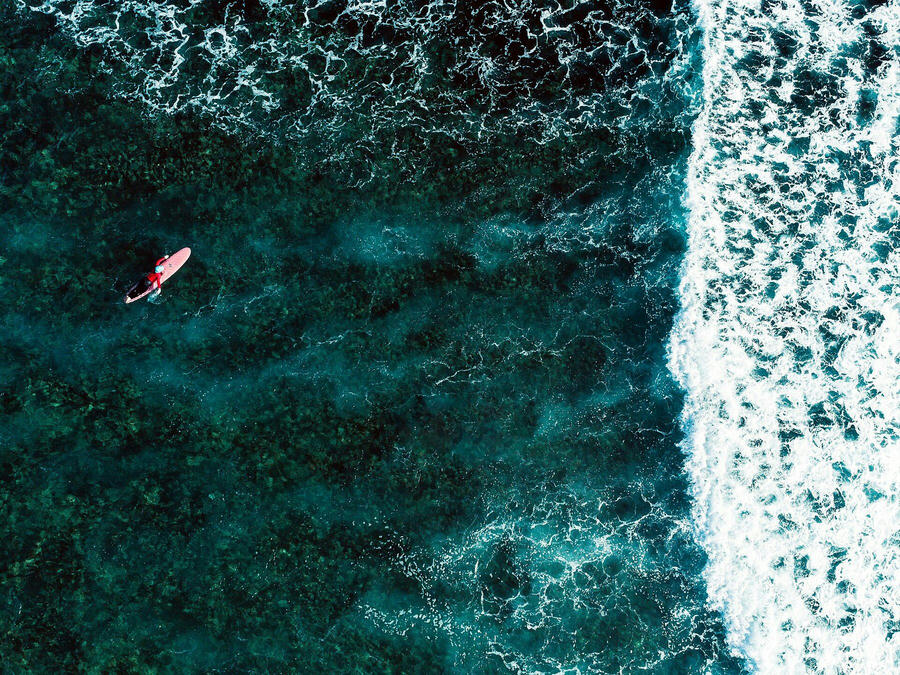

Siargao sits on the eastern edge of the Philippines with nothing between it and the open Pacific. That is the whole story of why the surf here is good: swell generated thousands of kilometres away arrives with its period intact and meets a shallow coral reef head-on. Everything else — which month, which board, which spot — is detail on top of that.
But the detail matters, because "Siargao is good in season" is the kind of advice that puts a first-time reef surfer in the water at Cloud 9 in November. Here is the honest version.
The two winds
The Philippine year runs on two monsoons.
The habagat, the southwest monsoon, blows roughly from late May into October. On Siargao's east coast that wind arrives from behind the island — offshore at Cloud 9, offshore at Tuason, offshore at most of the reefs that matter. Offshore wind grooms a swell: it holds the face up, delays the break, and turns an ordinary three-foot wall into something worth photographing.
The amihan, the northeast monsoon, takes over from roughly November through April. It comes in onshore on the east coast. It also brings the north swells that make some spots better than they are the rest of the year, so amihan is not a dead season — it is a different one, with the good days concentrated in the early mornings before the wind fills in, and the west and north coasts coming into their own.
Layered on top of both is typhoon season, broadly June to November, peaking around September and October. Distant typhoons are the engine behind the biggest, cleanest swells of the year. Close ones cancel your flight and shut the island down. You do not get one without the other.
The shape of the year
- August. The season switches on. Early in the month it is inconsistent — three flat days then a pulse — but the good days are genuinely good, and the island is not yet full. A quietly excellent time to come if you are flexible.
- September and October. The most consistent stretch of the year. Clean four-to-six foot faces are routine rather than remarkable, and there are far more surfable days than flat ones. Water is warm, mornings are glassy, the crowd is real but manageable outside the main peak.
- November. The biggest swells of the year arrive. Excellent if you are experienced, intimidating if you are not. Note also that the Philippines Pro occupies Cloud 9 from 31 October to 10 November — the main peak is closed to the public while heats run, and the island is at capacity.
- December to February. Amihan season. Still surfable and often very good, but more variable: onshore afternoons, cleaner dawns, occasional big north swells. Far fewer people. Prices drop.
- March to May. The dry season. Size settles into a clean two-to-four feet with long spells of light wind. This is the best window of the year for an improving surfer to get real mileage without getting worked, and the best water clarity if you also want to dive or snorkel.
How to read a forecast for this island
Three numbers, in order of importance.
Period. Anything at 12 seconds or more is proper groundswell — it will stand up on the reef and break with power. Eight seconds at the same height is windswell: weaker, messier, and much easier. Two forecasts both showing "1.5 m" can describe completely different days.
Direction. Cloud 9 and the General Luna reefs want swell out of the east through northeast. A southerly angle wraps in smaller. A hard northerly lights up Tuason and the northern spots more than the main peak.
Tide. This is the one visitors underweight. On the shallow reefs here the tide can be the difference between a fun wave and an unsurfable one, and a metre of tidal range changes the takeoff zone by dozens of metres. Cloud 9 generally prefers water on it — mid to high, rising. Low tide over coral is how people get hurt.
Then walk out on the boardwalk and look at it, because the model does not know about this morning's local wind.
What to bring
If you are charging September through November, a high-performance shortboard is the right call, and bring a spare set of fins and a repair kit — coral does not forgive.
For everything else, and for most visitors most of the time, a funboard around 7'0" to 7'6" will catch you several times more waves than the board you think you should be riding. Nobody has ever come home from a surf trip wishing they had caught fewer waves.
A longboard or log is a genuinely good choice in the dry season, when the two-to-four-foot walls at Jacking Horse and the softer reefs are made for it.
Bring booties if you burn easily on coral, a decent rash vest — the sun here is more of a threat than the water temperature, which sits around 28°C year round — and reef-safe sunblock, because whatever you put on your face ends up on the reef.
If you would rather not fly with a board, our rental quiver covers longboards, funboards and performance shortboards. Come in the night before and we will match you to something that suits the day rather than your ego.
← Surf NewsLatest from the crew
The Field Is Set: Who Surfs Cloud 9 in November
Trestles closed the regular season. The top 22 men and top 14 women, plus wildcards, go through Portugal to Siargao. And no, there is no QS at Cloud 9 in October.
Two Cloud 9 Surfers, One Asian Games Bronze
Surfing's first Asian Games ended with Jayuard Alciso beating Toby Espejon in an all-Filipino bronze-medal match in Japan: the Philippines' first surfing medal at the Games.
Love, Siargao Comes to Free TV
Alden Richards and Nadine Lustre's island romance is now on GMA Prime weeknights. What the show is about, and what to expect if it makes you want to come.